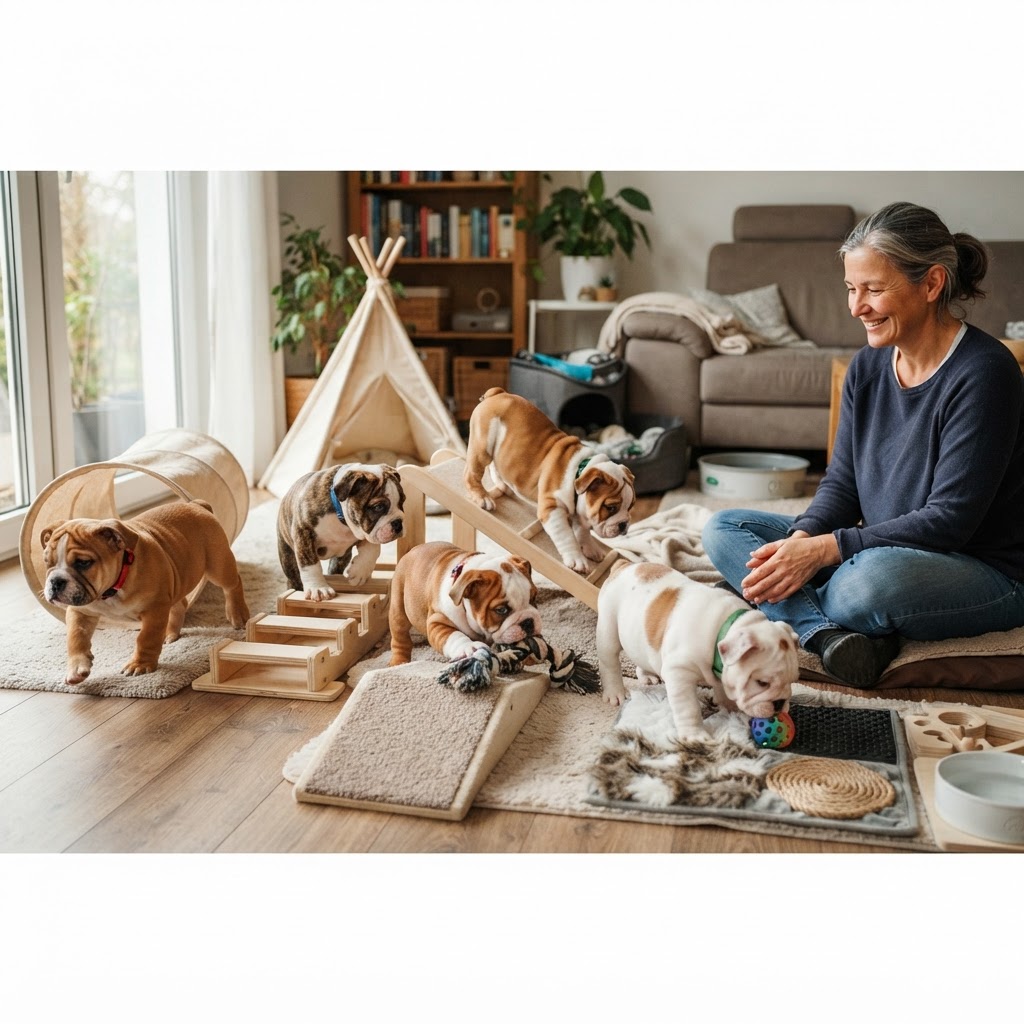
The first few weeks of a puppy's life are about much more than growing bigger—they're about learning how to navigate the world.
Responsible breeders know that early socialization helps shape confident, adaptable puppies. While much of a dog's lifelong development happens after they join their new family, the experiences they have before going home can make an important difference.
A well-socialized puppy is more likely to approach new people, places, sounds, and experiences with curiosity instead of fear.
What Is Puppy Socialization?
Socialization is the process of introducing puppies to everyday experiences in safe, positive, age-appropriate ways.
It's not about overwhelming a puppy with constant activity. Instead, it's about helping them gradually learn that the world is a safe place.
Positive early experiences can help puppies become more resilient as they mature.
Why Early Socialization Matters
During the first several weeks of life, puppies are especially receptive to learning about their environment.
Responsible breeders use this time to gently expose puppies to a variety of experiences while ensuring they always feel safe and supported.
These early interactions can help build:
- Confidence
- Curiosity
- Adaptability
- Problem-solving skills
- Positive human relationships
- Resilience in new situations
No amount of early socialization can guarantee a specific personality, but it provides a valuable foundation for future learning.
What Responsible Breeders Often Do
Every breeder has their own approach, but many responsible breeders introduce puppies to a variety of everyday experiences before they go home.
These may include:
Everyday Household Sounds
Puppies may safely experience common noises such as:
- Vacuum cleaners
- Television
- Doorbells
- Kitchen appliances
- Music
- Normal household conversation
Introducing these sounds gradually can help reduce fear later in life.
Different Surfaces
Walking on a variety of textures helps puppies become comfortable exploring new environments.
Examples include:
- Carpet
- Hardwood floors
- Grass
- Rubber mats
- Concrete
- Soft blankets
Gentle Human Interaction
Responsible breeders often encourage puppies to interact with a variety of trusted people.
Positive handling may include:
- Gentle petting
- Being safely picked up
- Nail handling
- Paw touching
- Ear checks
- Short grooming sessions
These early experiences can make future veterinary visits and grooming less stressful.
Age-Appropriate Enrichment
Many breeders provide simple enrichment activities to encourage curiosity and confidence.
Examples include:
- Safe toys with different textures
- Tunnels
- Small climbing objects
- Balance surfaces
- Puzzle toys designed for puppies
- New objects introduced gradually
The goal is exploration—not overstimulation.
Meeting New People
When done safely, exposure to different people can help puppies become more comfortable with visitors later in life.
Responsible breeders may introduce puppies to:
- Adults
- Older children
- People wearing hats
- People with glasses
- Individuals using mobility aids
These positive interactions help puppies understand that people come in many forms.
Socialization Doesn't End When You Bring Your Puppy Home
Your breeder starts the process—but you'll continue it.
After your veterinarian advises it's safe to do so, continue introducing your puppy to the world through positive experiences.
This might include:
- Meeting friendly people
- Visiting new places
- Riding in the car
- Walking on different surfaces
- Hearing everyday sounds
- Attending puppy socialization classes recommended by your veterinarian
The goal is quality experiences—not quantity.
Questions to Ask a Breeder
When visiting a breeder, consider asking:
- How do you socialize your puppies?
- What new experiences do puppies have before going home?
- How are puppies exposed to household sounds?
- How much daily interaction do puppies receive?
- What enrichment activities do you provide?
- Do you have recommendations for continuing socialization after adoption?
Breeders who prioritize early development are usually happy to explain their approach.
Red Flags
You may want to ask additional questions if a breeder:
- Raises puppies with minimal human interaction.
- Keeps puppies isolated until they leave for their new homes.
- Cannot describe their socialization practices.
- Sends puppies home without discussing ongoing socialization.
- Appears unconcerned about a puppy's emotional development.
Socialization is one of the many signs that a breeder is investing in the long-term well-being of their puppies.
Socialization Is a Lifelong Journey
The first few weeks create a strong foundation—but your puppy's education is just beginning.
Consistent training, positive reinforcement, gentle exposure to new experiences, and patience will continue shaping your Bulldog into a confident adult companion.
Every positive experience helps build trust.
Learn More
If you're preparing to welcome an English Bulldog puppy, you may also enjoy:
Great breeders start the journey, but new owners continue it. By building on the positive experiences your puppy receives early in life, you'll help your English Bulldog grow into a confident, well-adjusted companion ready to enjoy everything life has to offer.
🩺 Medical Information Notice
This guide is intended for educational purposes only. Every puppy develops at their own pace, and socialization should always be safe, gradual, and appropriate for the puppy's age and vaccination status. Consult your veterinarian for guidance on when your puppy can safely begin exploring new environments and meeting other dogs.