The Bulldog at War
From Churchill's defiant Britain to the Devil Dogs of the Marine Corps, the English Bulldog has served as a symbol — and a living mascot — of military courage for over a century.
United Kingdom
British Military Heritage
Why the Bulldog Became a Symbol of Courage and Determination
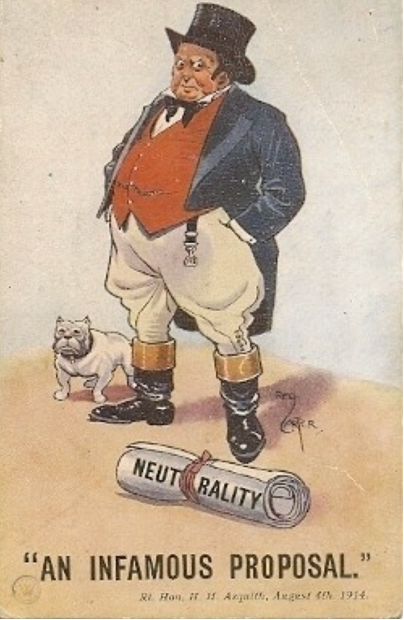
Long before it represented a nation, the English Bulldog earned its reputation in the brutal sport of bull-baiting — a practice dating back to the 13th century. Bred for tenacity, grip strength, and an almost supernatural refusal to back down, the bulldog came to embody a very particular kind of bravery: not flashy or fast, but unyielding. When bull-baiting was outlawed in 1835, the breed's fighting days ended, but its legend only grew. The bulldog's stoic expression, muscular frame, and fearless nature made it a natural personification of the national character Britons aspired to — stubborn, loyal, and impossible to intimidate. It became tied to John Bull, the fictional personification of England, and from there the leap to military symbolism was a short one.
Winston Churchill with a bulldog
Wartime Propaganda and Symbolism
During both World Wars, the bulldog became one of the most powerful images in British propaganda. Posters depicted a resolute bulldog in a Union Jack waistcoat or military cap, jaw set, staring down the enemy. The message was unmistakable: Britain may be bombed, blockaded, and battered, but it would not break. The bulldog stood for the home front's grit and the fighting man's resolve. enemy caricatures were often contrasted — slinking dachshunds or whimpering pups — against the solid, immovable British bulldog. The image appeared on recruitment posters, war bond drives, editorial cartoons, and morale-building leaflets distributed across the Empire.
Churchill and the Bulldog Image
No figure is more closely associated with the "British Bulldog" persona than Winston Churchill. Though Churchill never personally owned a bulldog (he favored poodles and a cat named Nelson), his jowled face, stocky build, defiant scowl, and V-for-Victory posture made the comparison irresistible to cartoonists on both sides of the Atlantic. Nazi propaganda mocked him as a bulldog snapping at the heels of the Reich; British illustrators embraced the image as a badge of honor. Churchill's speeches — "We shall fight on the beaches… we shall never surrender" — gave the bulldog metaphor its voice. To this day, the phrase "British Bulldog" instantly evokes Churchill's wartime resolve, and countless statues, mascots, and even Royal Navy ships have carried the association forward.
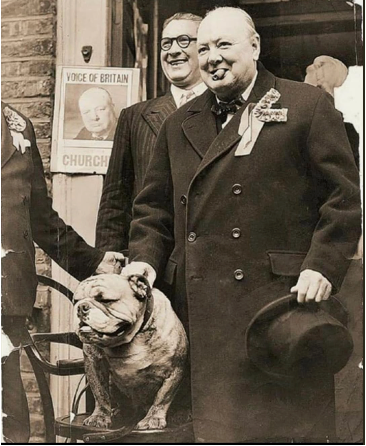
Winston Churchill with a bulldog
United States Marine Corps
The Devil Dogs & Their Bulldogs
Why the Marines Are Called "Devil Dogs"
The legend was born in June 1918 at the Battle of Belleau Wood, one of the bloodiest engagements for the U.S. in World War I. According to Marine tradition, the ferocity of the attacking Americans so shook the German defenders that they reportedly called them "Teufel Hunden" — Devil Dogs. The exact origin of the term is debated by historians, but the Marines embraced it instantly and permanently. The nickname captured something essential about the Corps' identity: relentless, feared, and proud of it. Within months, the Devil Dog legend fused with another powerful image — the bulldog — when artist Charles Falls produced the iconic 1918 recruiting poster of a Marine-helmeted bulldog chasing a German Dachshund. The poster spread across America and sealed the bulldog as the visual embodiment of the Devil Dogs.
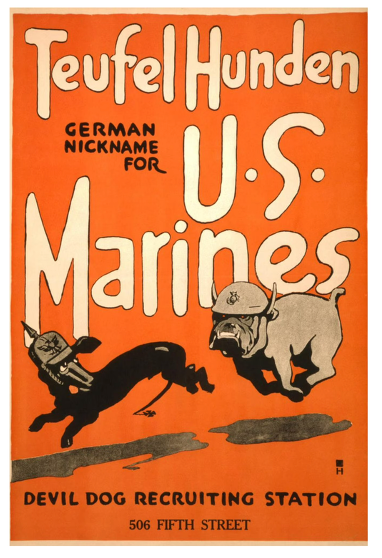
Charles Falls, 1918 — the iconic Marine recruiting poster
How the Bulldog Became an Unofficial Mascot
Once the Falls poster made the bulldog synonymous with Marine toughness, it was only a matter of time before a live bulldog joined the ranks. Brigadier General Smedley D. Butler — one of the most colorful and decorated Marines of his era — took the decisive step in 1922, purchasing a bulldog and renaming him "Jiggs" before officially enlisting him at Marine Corps Base Quantico. The bulldog's stocky build, fierce expression, and stubborn courage were a perfect match for the Marine ethos. What began as a publicity and morale effort evolved into a sacred tradition: every Marine mascot would hold real rank, be subject to military discipline, and serve with the same honors as any leatherneck. The bulldog was no longer just a symbol on a poster — it was a Marine.
Famous Marine Bulldogs
From Private Jiggs (1922) to PFC Chesty XVI (today)
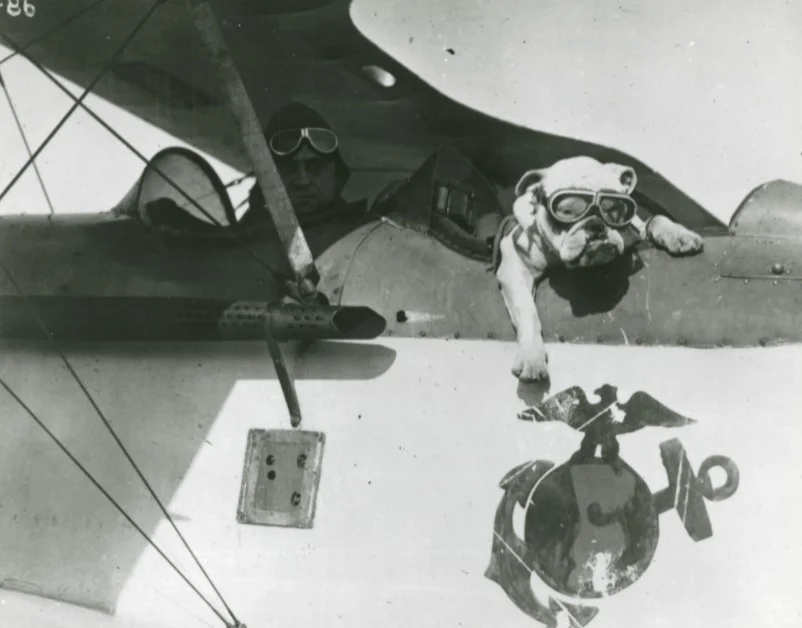
© Smithsonian National Air and Space Museum / USMC Archives
Private Jiggs Enlists at Quantico
The first official USMC bulldog mascot was purchased by Brigadier General Smedley D. Butler, who changed the dog's name from "King Bulwark" to "Jiggs." Jiggs was officially enlisted on October 7, 1922 at Marine Corps Base Quantico. General Butler signed his enlistment papers and tasked him with representing the Marine Corps at public functions and boosting Marine morale. Jiggs was a hard-charger — within three months he was promoted to Corporal, reached Sergeant by the end of 1924, and became Sergeant Major shortly after. When Jiggs died on January 27, 1927, his satin-lined coffin lay in state at Quantico and he was interred with full military honors.
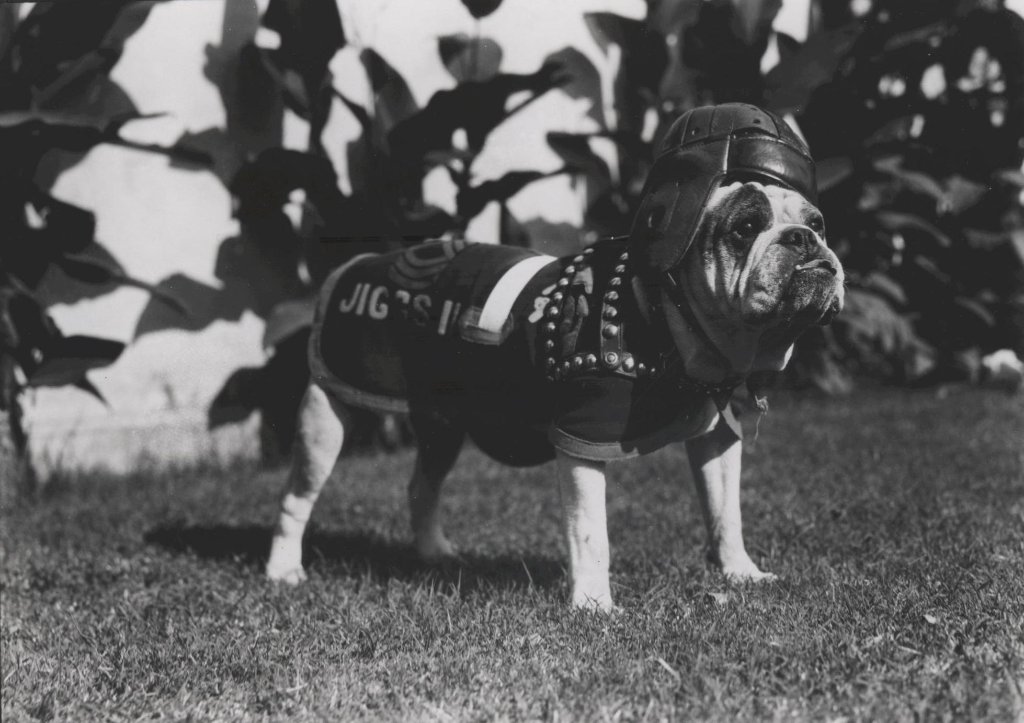
© USMC Archives from Quantico, USA
Jiggs II & The Smedley Years
After Jiggs I's passing, Jiggs II took over in 1927. Over the following two decades, a series of bulldogs were named Smedley in honor of Brigadier General Smedley D. Butler — the man who first enlisted Jiggs and signed his papers. These dogs served through World War II and the Korean War era, keeping the tradition alive and morale high throughout some of the Corps' most defining moments in history.

© Virginia War Memorial
Chesty I — A New Name, A New Legacy
In 1957, the lineage name changed permanently. A new bulldog named Chesty made his debut at the Evening Parade of Marine Barracks Washington, D.C. — the oldest post in the Corps, known as "8th & I." He was named in honor of Lieutenant General Lewis Burwell "Chesty" Puller, the most decorated Marine in U.S. history. General Puller earned five Navy Crosses and one Distinguished Service Cross serving in WWII and the Korean War, and famously quipped: "Take me to the brig. I want to see the real Marines." The Marine Corps mascot has borne his name with pride for nearly 70 years.

© Virginia War Memorial
Chesty VI — The Incorrigible Jarhead
Not every Chesty was a model Marine. In 1979, Chesty VI was demoted from Private First Class to Private for disobeying a direct order and destroying government property — specifically "willfully ripping and tearing up an Everlast striking bag, valued at approximately $176.80, military property of the United States." In 1981 he was cited again and given 14 extra days of duty for the unlawful biting of two Corporals. His career mirrored more than a few legendary gyrenes: troublemakers in garrison who'd have made fierce fighters in combat. Semper Feisty.

© USMC / Sgt. Mallory VanderSchans
Chesty XIV — Eagle, Globe & Anchor Pinning
Each incoming Chesty receives his Eagle, Globe and Anchor in a formal pinning ceremony — just like any other Marine. PFC Chesty XIV received his at Marine Barracks Washington in April 2013, representing a proud continuation of the 56-year tradition begun by Chesty I. The ceremony underscores that these bulldogs are not merely pets or props — they are Marines, subject to military rank, promotion, demotion, and retirement with honors.
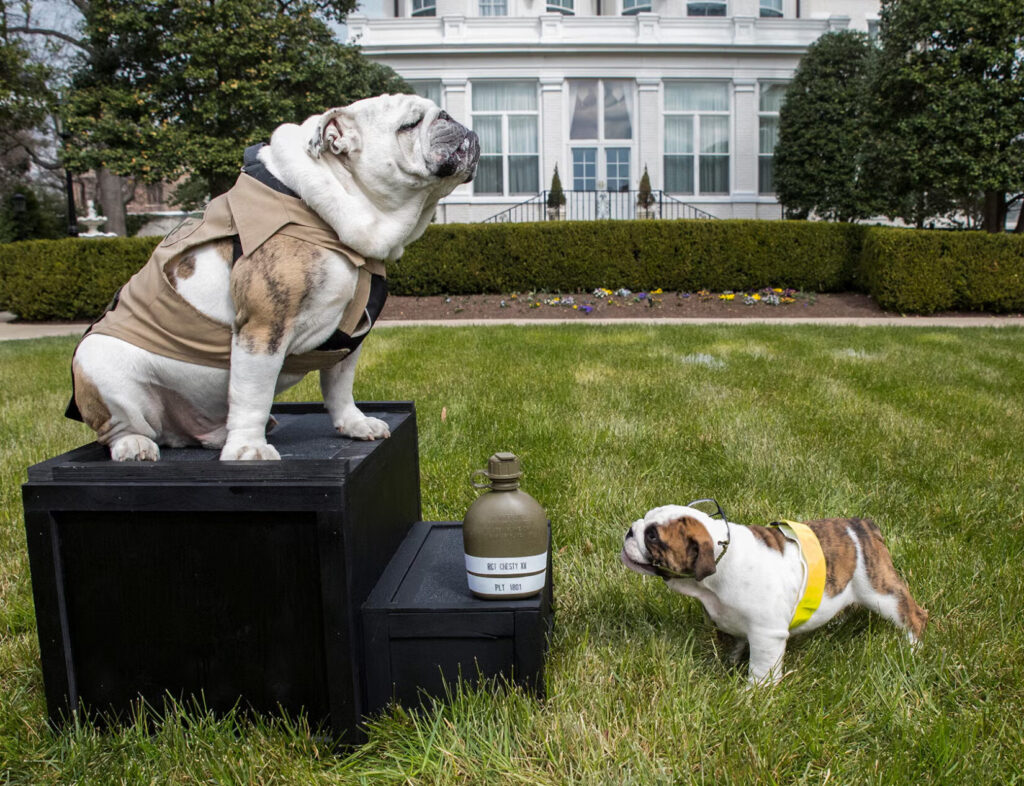
© USMC / Sgt. Robert Knapp
Chesty XIV Meets Chesty XV
In 2018, the torch was passed once again as a young bulldog puppy — Chesty XV — was enlisted and introduced to his predecessor. The two bulldogs famously appeared together on the lawn of Marine Barracks Washington (8th & I), a moment captured in this iconic photo. Chesty XIV served until Chesty XV was old enough and sufficiently potty-trained to take over full duties. Both have since retired and gone to live with their former handlers and families.

© Virginia War Memorial
Corporal Opha May — Breaking Barriers at Parris Island
MCRD Parris Island introduced its own bulldog mascot in 2017: Corporal Opha May — the first female bulldog to serve as a USMC mascot. Named in honor of Opha May Johnson, the first woman ever sworn into the Marine Corps in 1918, she graduated basic training with her official height and weight documented in her military record. She stands as a symbol of the legacy of women's service in the Corps, exactly 100 years after her namesake broke the same barrier.

© USMC / Cpl. Chloe McAfee / DVIDS
PFC Chesty XVI — Currently Serving
In May 2022, Chesty XVI took over as the current official mascot of the Marine Corps, with Chesty XV retiring as a Lance Corporal in a formal ceremony at 8th & I. Chesty XVI entered service at the rank of Private and has since been promoted. He was awarded the Navy and Marine Corps Good Conduct Medal by Secretary of the Navy John Phelan for three years of honorable service at Marine Barracks, Washington. He performs at drill ceremonies, parades, and public events — carrying on over 100 years of proud bulldog service.
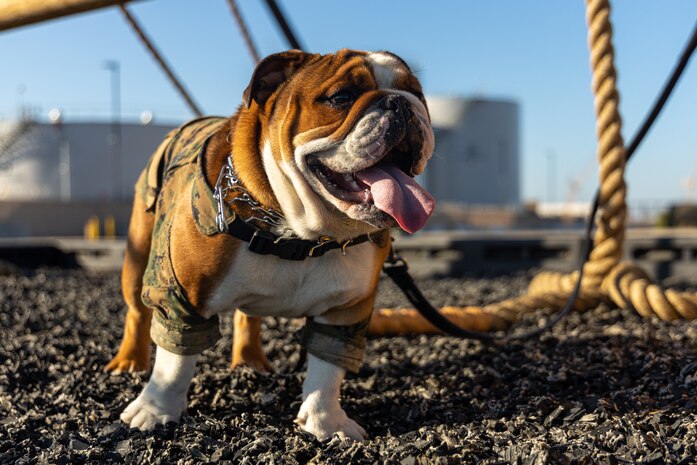
© USMC / Cpl. Joshua Dreher
A Corps-Wide Tradition
Chesty XVI is not alone. Multiple Marine Corps installations maintain their own official English Bulldog mascots. MCRD San Diego is represented by Lance Corporal Bruno, named after Major General Bruno Hochmuth. Parris Island has Corporal Opha May. Each bulldog is officially enlisted, given military rank, and subject to the Uniform Code of Military Justice — just like any other Marine. From a single dog named Jiggs in 1922, the tradition has grown into a living institution that spans the entire Corps.
Coming Soon
Military Mascots Around the World
The English Bulldog's military legacy extends far beyond Britain and the United States. This section will spotlight bulldog and bulldog-type mascots serving armed forces around the world — from regimental mascots in Commonwealth nations to ceremonial dogs in other militaries.
Have an example to contribute? This section is built to grow — additional military mascots will be added here as they're documented.
Sources: Virginia War Memorial · AKC · Safariland