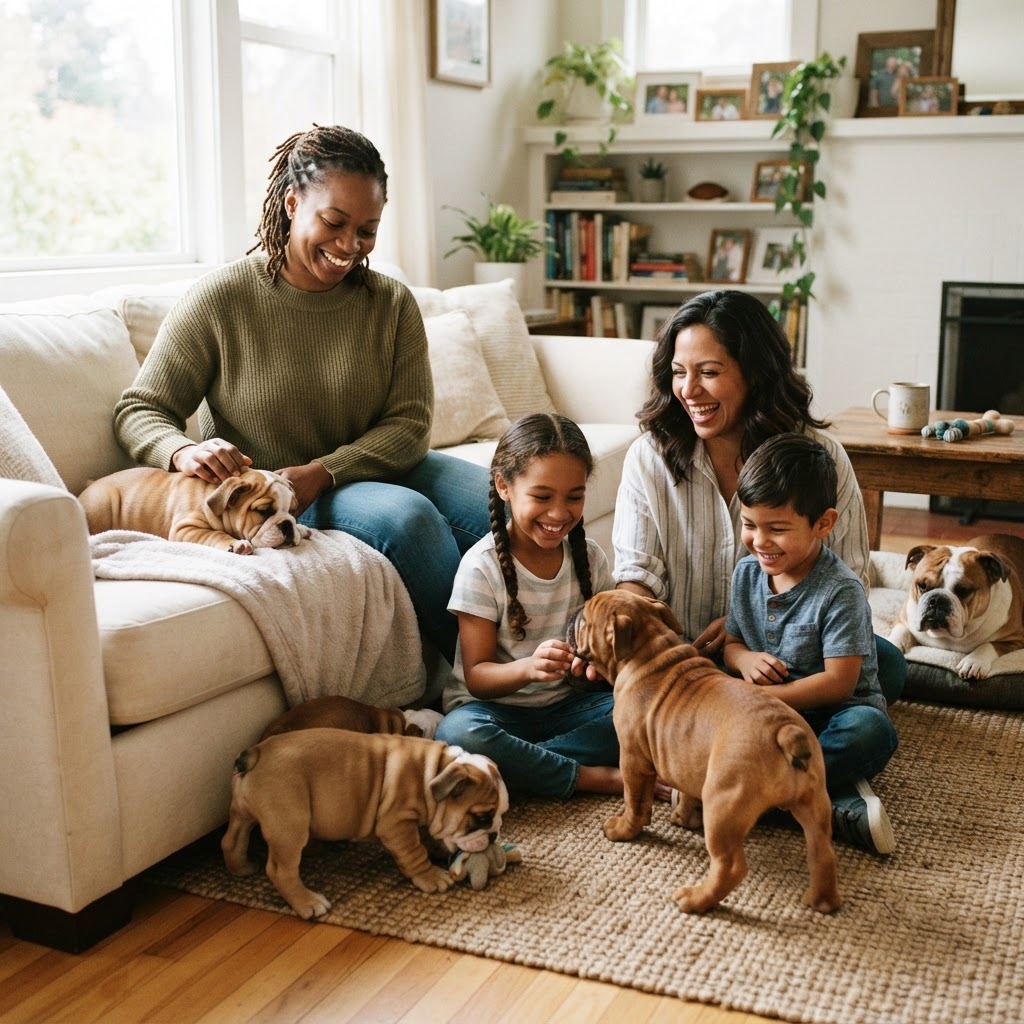
One of the greatest joys of sharing your life with an English Bulldog is their personality.
They're known for being affectionate, loyal, comical, and deeply devoted to their families. While every dog is an individual, responsible breeders understand that temperament is just as important as appearance and health when planning a litter.
A puppy's personality is shaped by both genetics and early life experiences. Choosing a breeder who prioritizes stable, confident temperaments can help set the foundation for a lifelong companion.
What Is Temperament?
Temperament refers to a dog's natural behavioral tendencies—how they respond to people, new experiences, other animals, and the world around them.
A well-adjusted English Bulldog should generally be:
- Friendly and people-oriented
- Calm and confident
- Curious without being fearful
- Gentle with appropriate socialization
- Adaptable to everyday life
- Comfortable meeting new people
Individual personalities will vary, but puppies should not routinely display extreme fear, aggression, or anxiety.
Good Temperament Starts With the Parents
Responsible breeders spend years getting to know their breeding dogs—not just their appearance and health, but their personalities.
Before deciding to breed a dog, many breeders evaluate traits such as:
- Confidence
- Friendliness
- Ability to recover from new experiences
- Comfort around strangers
- Interactions with other dogs
- Trainability
- Overall stability
Because temperament has a genetic component, thoughtful breeding decisions can help improve future generations.
Early Experiences Matter Too
Even the best genetics benefit from positive early experiences.
Responsible breeders often expose puppies to a variety of age-appropriate sights, sounds, surfaces, and gentle handling during their first weeks of life.
These experiences may include:
- Household noises
- Different flooring surfaces
- Gentle interaction with adults and children
- Safe exploration
- Introduction to everyday routines
Early socialization helps puppies become more adaptable as they grow.
Meeting the Parents
Whenever possible, ask to meet at least the puppy's mother.
Observe whether she appears:
- Relaxed
- Friendly
- Comfortable around visitors
- Confident
- Well cared for
Some breeders may also be able to introduce you to the sire or provide information about his temperament if he lives elsewhere.
Remember that a mother caring for young puppies may naturally be somewhat protective, but she should not display uncontrolled fear or aggression.
Questions to Ask a Breeder
Consider asking:
- How would you describe the personalities of the parents?
- What traits are you trying to preserve or improve?
- How are puppies socialized before going home?
- How do you match puppies with families?
- Have previous puppy owners shared updates about temperament?
- What support do you provide after puppies go home?
Thoughtful breeders enjoy discussing these topics because temperament is a major part of responsible breeding.
A Good Breeder Chooses for You, Too
Many experienced breeders spend weeks observing each puppy's developing personality.
Rather than allowing families to choose based only on appearance, some breeders help match puppies based on lifestyle and temperament.
For example:
- A more laid-back puppy may be a wonderful fit for a quieter household.
- A more outgoing puppy may enjoy an active family with older children.
- A particularly confident puppy may thrive with owners interested in training or canine activities.
This thoughtful matching process often leads to happier dogs and happier families.
Red Flags
Consider asking additional questions if a breeder:
- Focuses only on color or appearance.
- Cannot describe the personalities of their breeding dogs.
- Raises puppies with little human interaction.
- Is unwilling to discuss socialization.
- Rushes puppies into new homes before they are developmentally ready.
- Doesn't ask you about your own lifestyle.
Responsible breeders care just as much about where their puppies are going as they do about producing them.
Nature and Nurture
Temperament isn't determined by genetics alone.
Once your puppy comes home, your own commitment to training, positive reinforcement, socialization, patience, and routine will continue shaping their behavior throughout life.
Even a well-bred puppy benefits from thoughtful guidance, consistency, and love.
Learn More
If you're searching for an English Bulldog puppy, you may also enjoy:
Looking for a well-matched companion? Take your time, ask thoughtful questions, and remember that a puppy's personality is just as important as its appearance. A responsible breeder will be happy to discuss how they prioritize stable, loving temperaments and help match you with the right puppy for your family.
🩺 Medical Information Notice
This guide is provided for educational purposes only. Every dog is an individual, and temperament is influenced by genetics, early experiences, training, socialization, and environment. No breeder can guarantee a specific personality or behavior.