Bringing home an English Bulldog is an exciting decision—but it's also one that should begin long before you meet your puppy.
One of the best ways to improve your chances of bringing home a healthy companion is to choose a breeder who prioritizes health testing. While no dog can be guaranteed to be free of every health condition, responsible breeders use recommended health screenings to reduce the likelihood of passing inherited diseases to future generations.
Health testing isn't about finding "perfect" dogs. It's about making informed breeding decisions that support the long-term health of the breed.
What Is Health Testing?
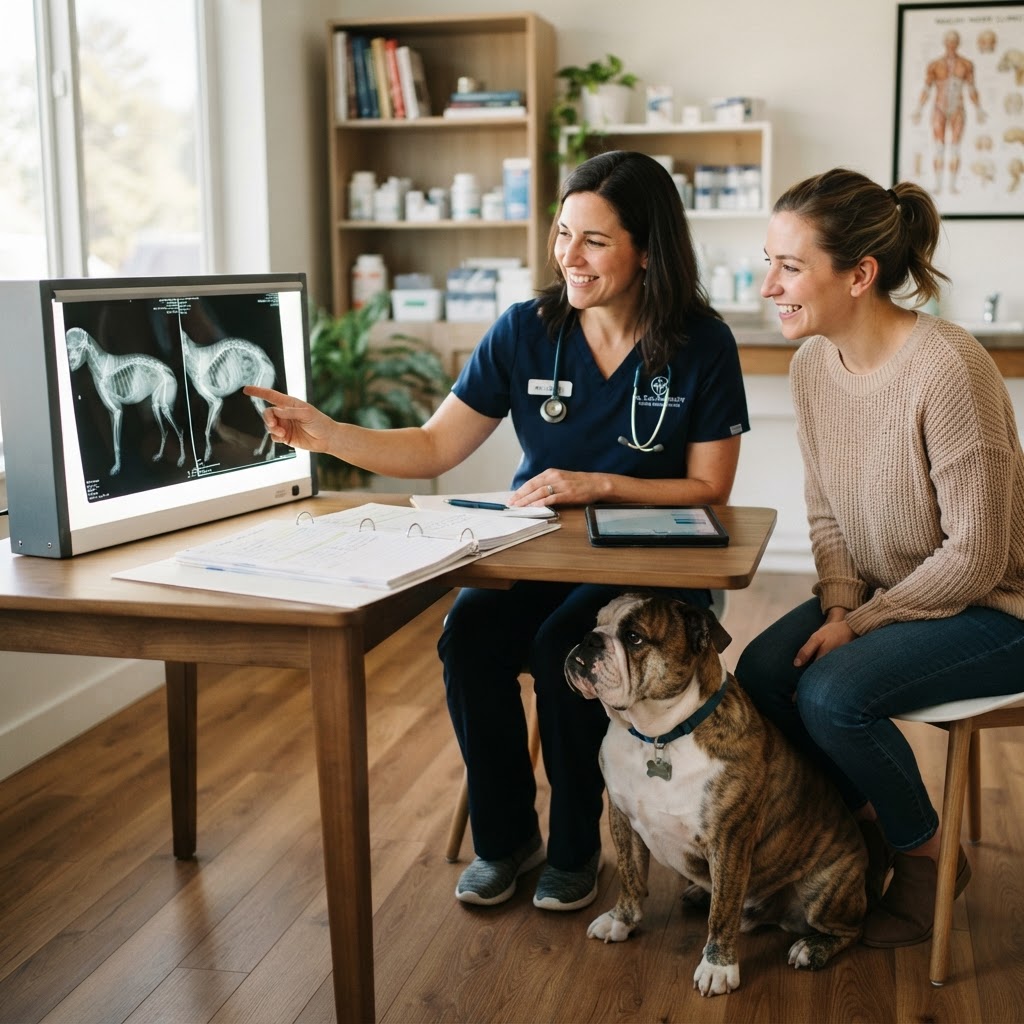
Health testing refers to veterinary examinations, diagnostic imaging, and genetic evaluations performed on breeding dogs before they are bred.
These tests help identify inherited conditions that may not be obvious during a routine physical exam but could be passed on to puppies.
Responsible breeders use these results to decide whether a dog should be included in a breeding program.
Why It's Especially Important for English Bulldogs
English Bulldogs are a wonderful breed with unique physical characteristics, but those same characteristics can also make them more susceptible to certain health concerns.
Depending on genetics, individual dogs may experience issues involving:
- Breathing and airway function
- Hips and joints
- Knees (patellas)
- Heart health
- Eyes
- Skin
- Spine
- Trachea
- Overall mobility
Good breeding practices cannot eliminate every health issue, but they can significantly reduce risk by selecting breeding dogs with healthier evaluations.
Common Health Screenings
Health testing varies among breeders, but many responsible English Bulldog breeders perform some combination of the following evaluations.
Hip Evaluation
Hip dysplasia is a developmental condition that affects the hip joint.
Radiographs (X-rays) reviewed by organizations such as the Orthopedic Foundation for Animals (OFA) can help determine whether breeding dogs have healthy hips.
Cardiac Examination
Some Bulldogs may inherit certain heart conditions.
A veterinary cardiac evaluation helps identify potential concerns before breeding.
Patella Evaluation
This screening checks whether the kneecaps move normally and remain properly positioned.
Eye Examination
An eye examination by a board-certified veterinary ophthalmologist can identify inherited eye diseases that may affect vision.
Trachea and Airway Evaluation
Because Bulldogs are a brachycephalic (short-nosed) breed, airway health is particularly important.
Many responsible breeders carefully evaluate breathing, nostril size, airway structure, and overall respiratory health when selecting breeding dogs.
Spine Evaluation
Some Bulldogs may have congenital spinal abnormalities that can contribute to pain or mobility issues.
Screening can help breeders make more informed breeding decisions.
Genetic Testing
DNA testing is another tool responsible breeders may use.
While genetic tests cannot predict every health issue, they can identify carriers of certain inherited conditions and help breeders avoid producing affected puppies.
Genetic testing is most valuable when combined with physical health evaluations—not used as a replacement for them.
Questions You Can Ask a Breeder
A reputable breeder should be comfortable discussing the health of their dogs.
Consider asking:
- What health tests have the puppy's parents completed?
- Can I see copies of the health certifications?
- Have the sire and dam received OFA or equivalent evaluations?
- What health issues have appeared in your breeding lines?
- How do you decide which dogs to breed?
- Do you provide a written health guarantee?
- Will you answer health questions after I take my puppy home?
Good breeders typically welcome thoughtful questions because they care about placing puppies in informed, lifelong homes.
Red Flags
While every situation is different, consider asking additional questions if a breeder:
- Cannot provide documentation of health testing.
- Avoids discussing inherited health conditions.
- Claims their dogs have "never had any problems."
- Says health testing isn't necessary.
- Focuses only on color, size, or appearance.
- Is unwilling to answer questions.
Health testing requires time and expense, but it demonstrates a commitment to improving the breed.
Health Testing Is One Piece of the Puzzle
Health testing is incredibly important, but it's only part of what makes a responsible breeder.
Also look for breeders who:
- Raise puppies in clean, enriching environments.
- Socialize puppies appropriately.
- Allow you to meet at least the mother whenever possible.
- Ask you questions about your home and lifestyle.
- Remain available throughout the dog's lifetime.
- Have a clear contract and return policy.
The goal isn't simply to buy a puppy—it's to find a breeder who is committed to producing healthy, well-adjusted dogs and supporting their puppy families for years to come.
Learn More
If you're beginning your search, you may also find these guides helpful:
🩺 Medical Information Notice
This guide is intended for educational purposes only and should not replace advice from your veterinarian. Health testing helps reduce risk but cannot guarantee that a puppy will never develop inherited or acquired health conditions. Always consult qualified veterinary professionals regarding your dog's health.