Some news stories stay with you long after you've finished reading them.
The day Maggie's story made headlines, English Bulldog owners across the country found themselves asking the same question:
Could this happen in my backyard?
According to published reports, Maggie, an 11-year-old English Bulldog, was outside with her family on a summer afternoon in Myrtle Beach, South Carolina, when an alligator emerged from a nearby retention pond and attacked her just a few feet from the family's home. Her owner, Madeline Raynor, described the heartbreaking moments that followed as she tried to save her beloved companion while also protecting her two young children.
The incident has understandably generated strong emotions within the community. It has also renewed conversations about alligator safety in the neighborhood, where a fatal alligator attack involving a resident occurred several years earlier.
While the circumstances surrounding wildlife management are separate conversations, Maggie's story offers an important opportunity to talk about something every English Bulldog owner should know.
Bulldogs have unique physical characteristics that can make them especially vulnerable in emergency situations—including unexpected encounters with wildlife.
Our goal in sharing Maggie's story is not to create fear. It's to encourage awareness.
Because awareness can save lives.
Why English Bulldogs Face Different Outdoor Risks
Every dog breed has strengths and vulnerabilities.
English Bulldogs are known for their calm personalities, affectionate nature, and sturdy build. Those same physical traits, however, can become disadvantages during sudden emergencies.
Compared with many athletic breeds, Bulldogs generally have:
- Less speed.
- Less agility.
- Reduced endurance.
- Greater difficulty navigating steep banks or uneven terrain.
- Brachycephalic anatomy that can make strenuous exertion more challenging.
Those characteristics don't make Bulldogs fragile.
They simply mean that owners need to think about certain situations a little differently.
Retention Ponds Are More Than Decorative
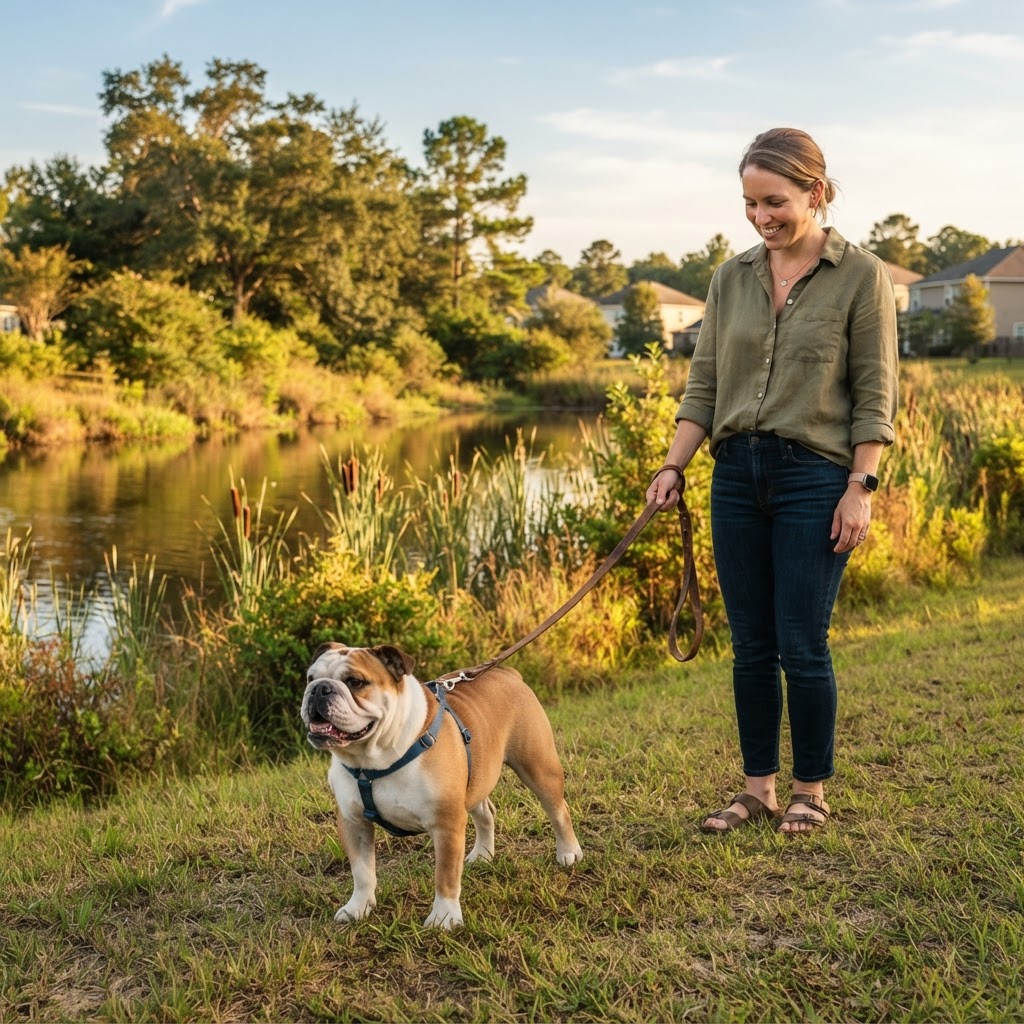
Many neighborhoods across the Southeast include retention ponds designed to manage stormwater.
To residents, they often look peaceful.
To wildlife, they can become permanent habitat.
In parts of South Carolina, Florida, Georgia, Louisiana, Alabama, Mississippi, and Texas, retention ponds may attract alligators.
Even when warning signs are posted, it's easy to become comfortable after walking past the same pond every day without incident.
Unfortunately, wildlife doesn't operate on routine.
Is Your Backyard Really Safe?
Perhaps the most sobering detail in Maggie's story is that she wasn't exploring deep in the woods.
She wasn't swimming in a lake.
She wasn't hiking on a remote trail.
She was in her own backyard.
Many homeowners naturally assume that a fenced yard provides complete safety.
Unfortunately, fences don't always stop wildlife, and ponds, wooded areas, drainage canals, and thick vegetation can all create opportunities for unexpected encounters.
That doesn't mean owners should become fearful of spending time outdoors with their dogs.
It simply means remaining observant—even in familiar places.
Choosing Care Providers Who Understand Bulldogs
Maggie's story also highlights another important lesson.
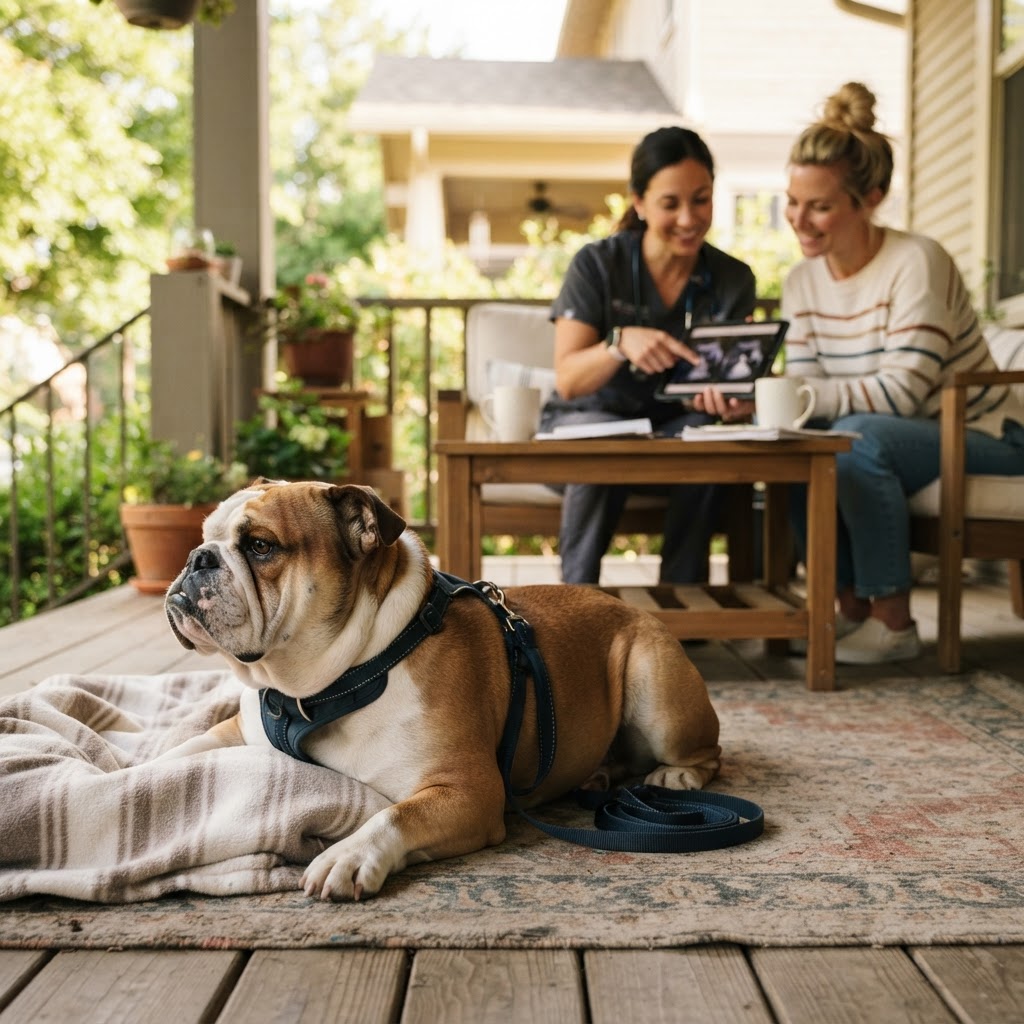
Whether you're selecting a dog daycare, boarding facility, pet sitter, or even allowing someone else to watch your Bulldog while you're away, it's worth asking whether they understand the breed's unique needs.
English Bulldogs aren't just another medium-sized dog.
Experienced caregivers understand the importance of monitoring:
- Heat sensitivity.
- Breathing difficulties.
- Exercise limitations.
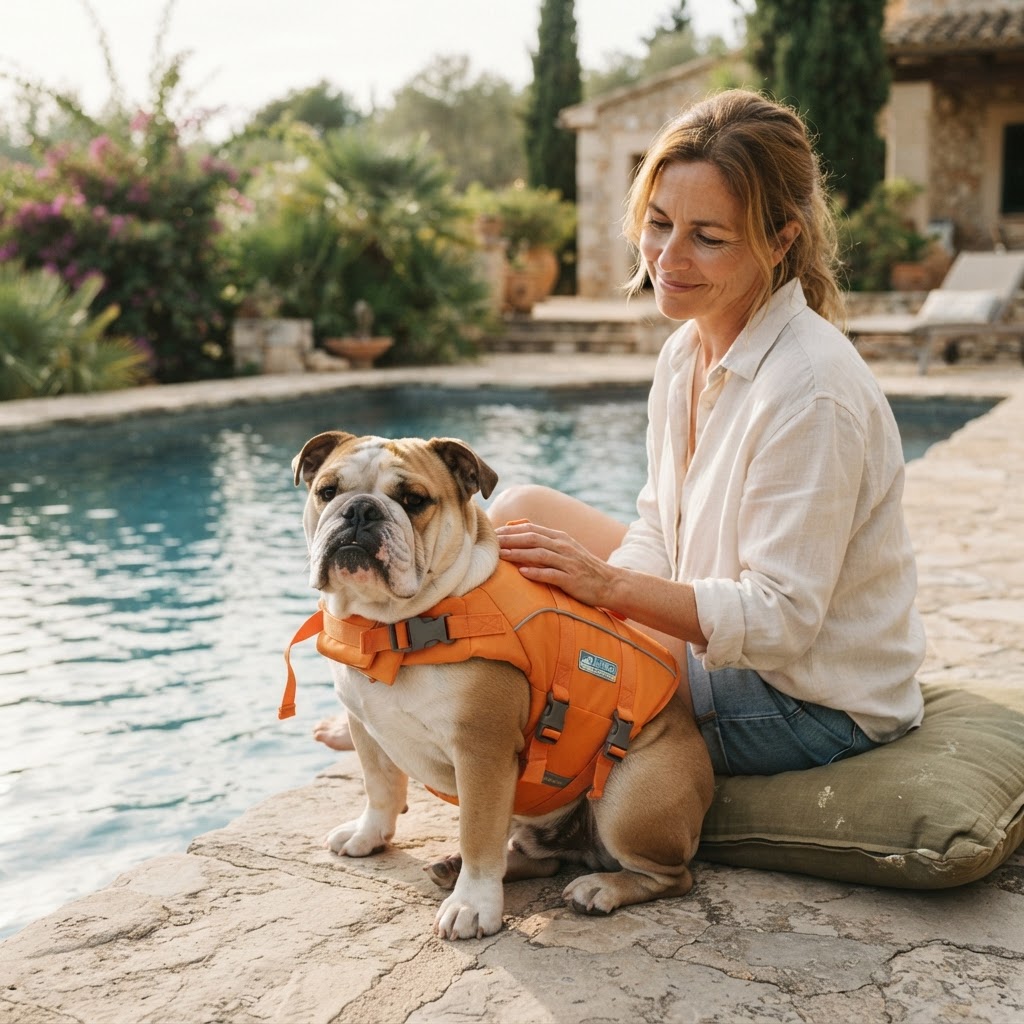
- Water safety.
- Outdoor environmental risks.
If a facility has ponds, lakes, pools, or wooded areas nearby, don't hesitate to ask questions.
Consider asking:
- Do Bulldogs have access to areas near water?
- What supervision is provided outdoors?
- Are staff familiar with brachycephalic breeds?
- What emergency procedures are in place?
- How are wildlife concerns handled?
- Is there a relationship with a nearby emergency veterinary hospital?
Good facilities appreciate informed owners.
These questions aren't about mistrust.
They're about making sure your Bulldog receives care from people who understand the breed.
Practical Wildlife Safety Tips
Fortunately, there are many simple precautions owners can take.
Know Your Environment
Learn what wildlife is common where you live.
Residents of coastal South Carolina face different risks than owners living in Colorado, Arizona, or New England.
Stay Back From Shorelines
If alligators are present in your region, avoid allowing Bulldogs to investigate pond edges or shallow shorelines.
Keep Bulldogs Leashed
Even well-trained dogs can react unpredictably to birds, turtles, or movement near the water.
Scan Before Entering the Yard
If your property backs up to water or wooded areas, take a quick look around before letting your Bulldog outside.
Trim Vegetation
Dense shrubs and tall ornamental grasses can reduce visibility along pond banks.
Avoid Dawn and Dusk
Many wild animals are more active during these periods.
Report Aggressive Wildlife
Follow guidance from your local wildlife agency if you observe animals behaving aggressively or unusually close to people.
Awareness, Not Fear
Stories like Maggie's naturally evoke strong emotions.
But they shouldn't keep owners from enjoying the outdoors with their Bulldogs.
Millions of families safely walk, hike, camp, and enjoy their backyards every day.
The goal isn't to become afraid.
The goal is to become informed.
Just as Bulldog owners learn about heat safety, breathing concerns, and wrinkle care, wildlife awareness becomes another part of responsible ownership for families living in regions where these risks exist.
Maggie's Legacy
Every Bulldog leaves paw prints on the hearts of the people who love them.
Reading about Maggie, it's impossible not to think about the years of memories she shared with her family.
Our hearts are with Madeline Raynor, her family, and everyone who loved Maggie as they grieve this unimaginable loss.
If Maggie's story encourages even one Bulldog owner to pause before opening the back door, ask a few more questions about a boarding facility, or become more aware of the wildlife in their own neighborhood, then her story may help protect other Bulldogs in the future.
Sometimes the most meaningful legacy comes from helping others stay safe.