Some Stories Stay With You
The day Bruce's story made headlines, it resonated deeply with English Bulldog owners across the country.
Reports of the one-year-old English Bulldog's death at a Santa Barbara dog daycare quickly spread through the dog community, leaving many heartbroken and asking difficult questions. While the circumstances surrounding Bruce's death remain under active investigation, the tragedy serves as an important reminder of something every Bulldog owner should understand: English Bulldogs face unique risks around water.
Bruce should have been coming home from a day of play.
Instead, one family is mourning the loss of a beloved companion, and many owners are taking a closer look at the environments where they entrust their dogs' care.
Although many dogs instinctively paddle when they enter the water, English Bulldogs often cannot swim safely without assistance. Their distinctive build—one of the many reasons we love the breed—can also make staying afloat incredibly difficult.
Bruce's story is a reminder that awareness, preparation, and choosing knowledgeable caregivers can help protect Bulldogs from preventable tragedies.
At a Glance
English Bulldogs are not natural swimmers. Their broad chests, short legs, and flat-faced anatomy make staying afloat and breathing in water especially difficult. Close supervision, a fitted life jacket, and knowledgeable caregivers all help reduce the risks.
Why English Bulldogs Struggle in Water
Many people assume that all dogs are natural swimmers. Unfortunately, that's not true for English Bulldogs.
Several characteristics that make Bulldogs so recognizable can also make swimming especially difficult:
- A broad, heavy chest shifts their center of gravity forward.
- Short legs generate less power in the water.
- Their brachycephalic (flat-faced) anatomy can make breathing more challenging, particularly during exertion.
- Fatigue can develop more quickly than in many other breeds.
While every dog is different, many Bulldogs simply cannot keep themselves afloat for long periods without assistance.
Water Safety Tips Every Bulldog Owner Should Know
Whether you're at a pool, lake, beach, dock, or even near a decorative pond, keep these safety tips in mind:
- Never assume your Bulldog can swim.
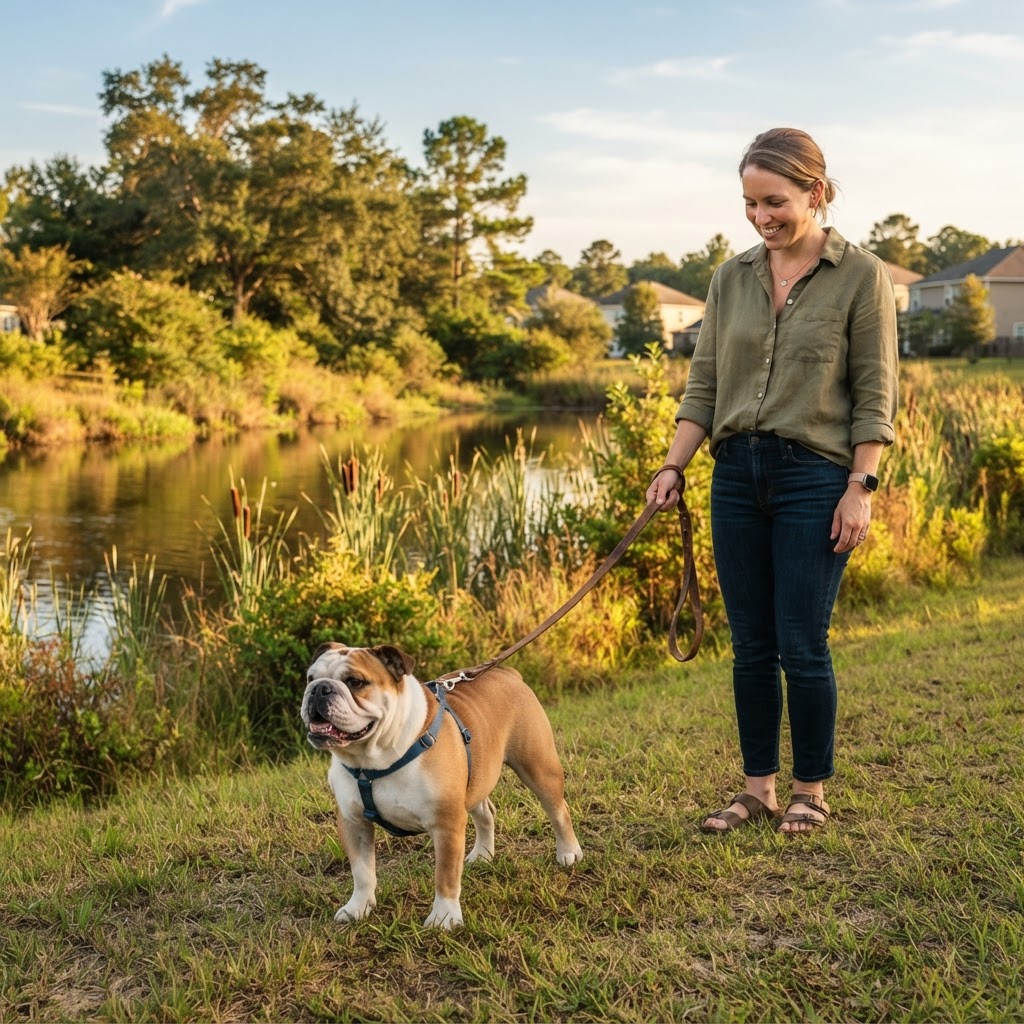
- Always provide close, active supervision around water.
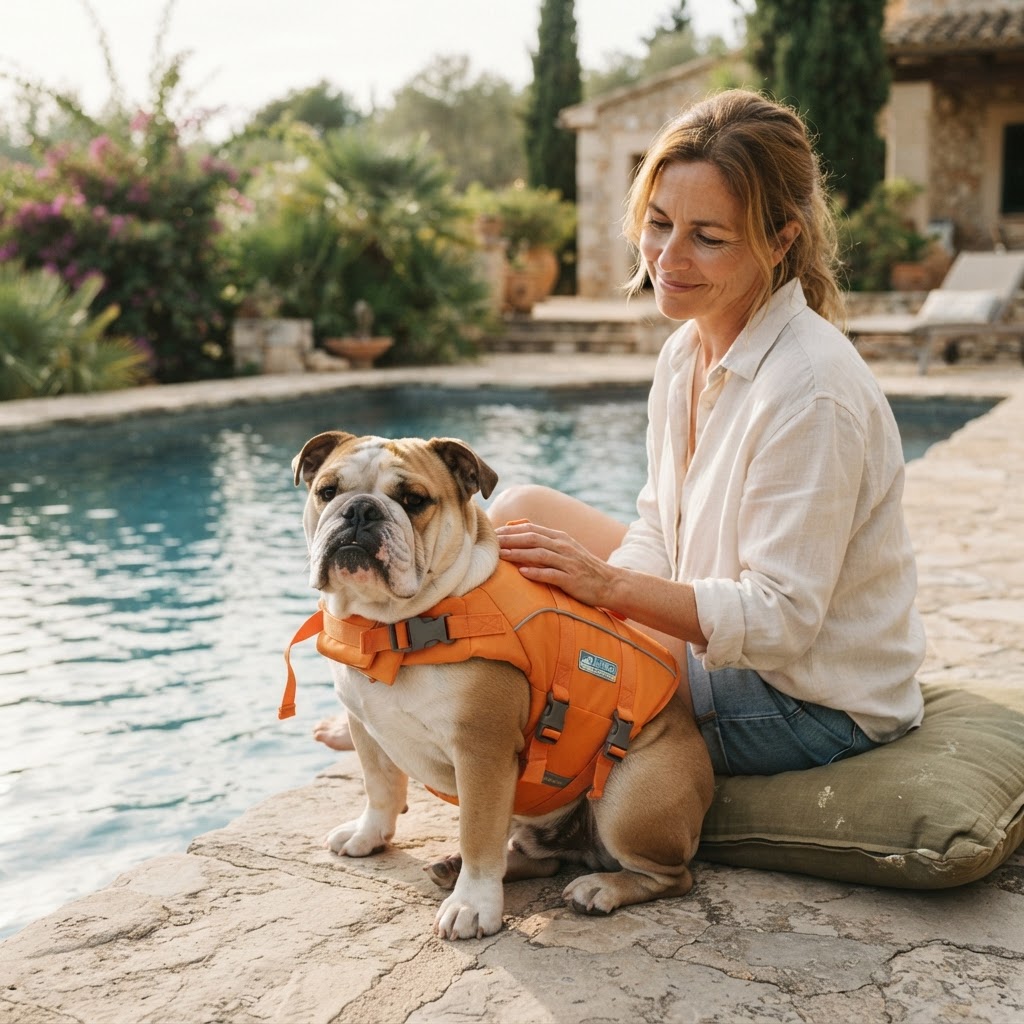
- Consider a properly fitted canine life jacket whenever your Bulldog is near deep water or on a boat.
- Introduce water gradually and never force your dog into it.
- Make sure your Bulldog knows how to exit a pool safely.
- Watch carefully for signs of exhaustion or breathing difficulty.
Vet Tip: Prevention is always easier than responding to an emergency. A fitted canine life jacket, close supervision, and knowing how your Bulldog exits the water are some of the simplest ways to help keep them safe.
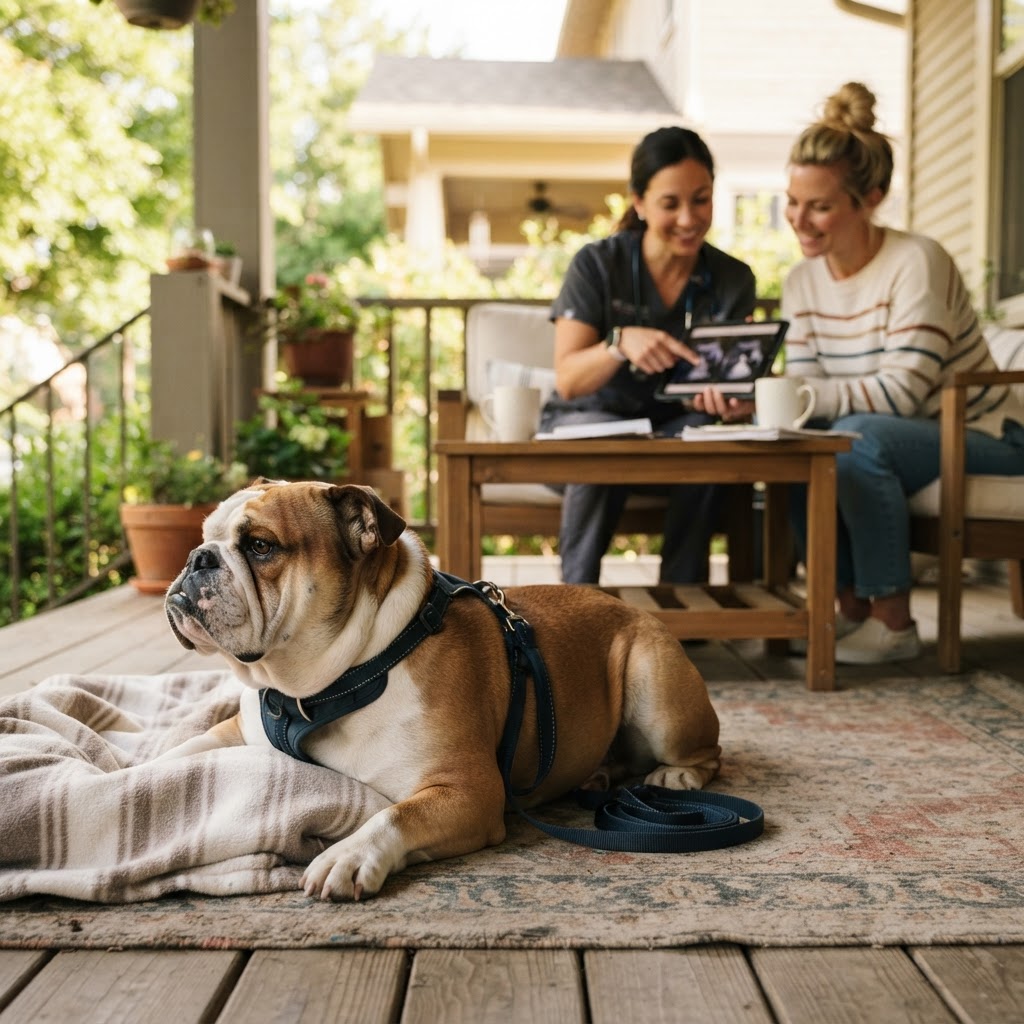
Choose Care Providers Who Understand the Breed
Most dog daycares and boarding facilities are staffed by caring professionals who work hard to keep pets safe every day. However, not every facility regularly cares for brachycephalic breeds like English Bulldogs, and not everyone understands the unique physical characteristics that can make Bulldogs more vulnerable around water, heat, and strenuous activity.
Before leaving your Bulldog in someone else's care, don't hesitate to ask questions about the facility's experience with the breed and its safety procedures.
Consider asking:
- Has your staff cared for English Bulldogs or other brachycephalic breeds before?
- Are employees trained to recognize signs of breathing distress or overheating?
- Do you have breed-specific care guidelines for Bulldogs?
- Do dogs ever have access to swimming pools, ponds, or other bodies of water?
- If so, what supervision protocols are in place?
- Are Bulldogs ever permitted in deep water?
- What emergency procedures are followed if a dog shows signs of respiratory distress or falls into the water?
- Is there an emergency relationship with a nearby veterinary hospital?
A reputable facility should welcome these conversations. English Bulldogs have unique health and safety considerations, and experienced caregivers understand that what may be appropriate for one breed isn't necessarily appropriate for another.
As owners, asking these questions isn't about mistrust—it's about advocating for a breed with very specific needs.
A Reminder Worth Sharing
Bruce's story has touched Bulldog lovers around the world. While investigators continue to determine exactly what happened, his story serves as an opportunity for all of us to become better informed and better prepared.
By understanding the breed's unique needs, asking thoughtful questions, and taking sensible precautions around water, owners and caregivers can help reduce the risk of similar tragedies.
Our hearts are with Bruce's family as they navigate this unimaginable loss. If greater awareness of English Bulldog water safety helps prevent even one similar tragedy, Bruce's story may leave a lasting legacy of education and prevention for Bulldogs everywhere.
Editorial Note: This article was inspired by news coverage of Bruce's death and is intended to educate English Bulldog owners about breed-specific water safety. The circumstances surrounding the incident remain under investigation, and English Bulldog Social is not drawing conclusions about the events described.