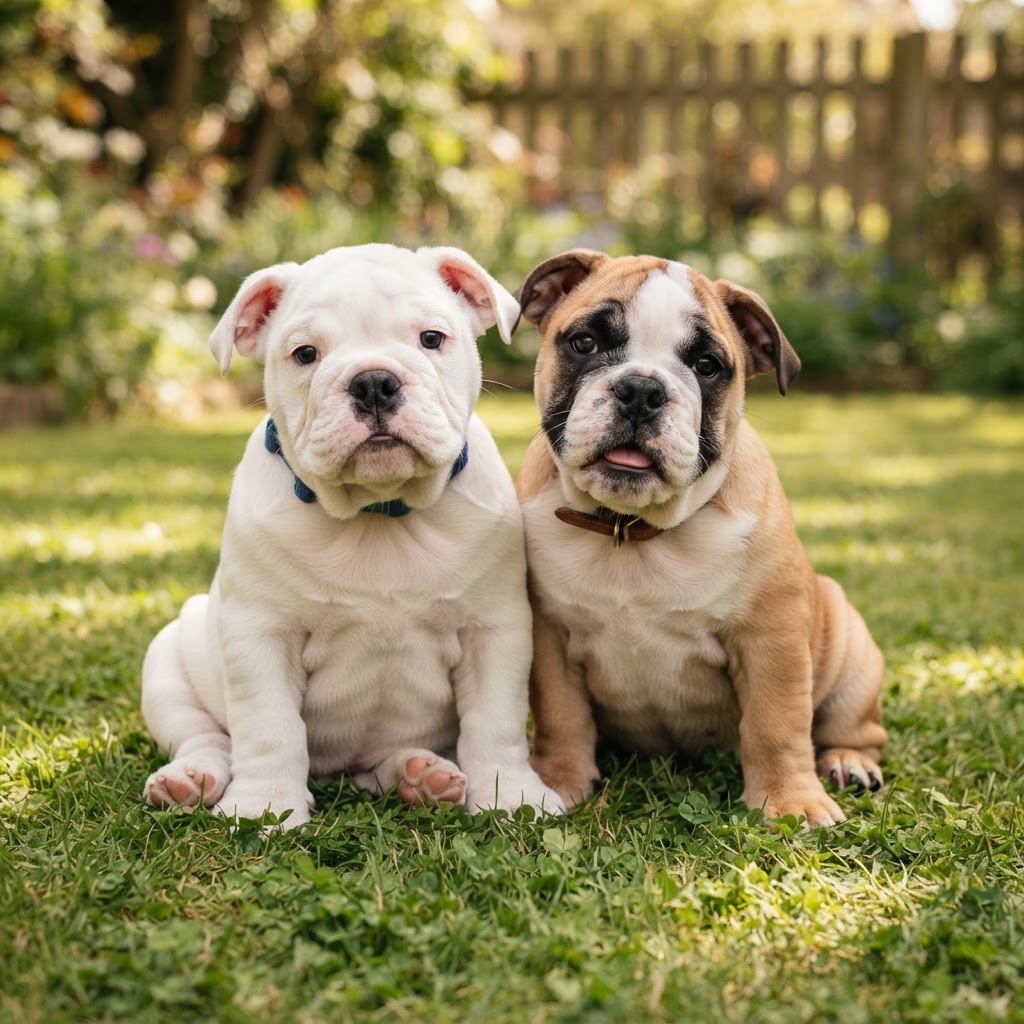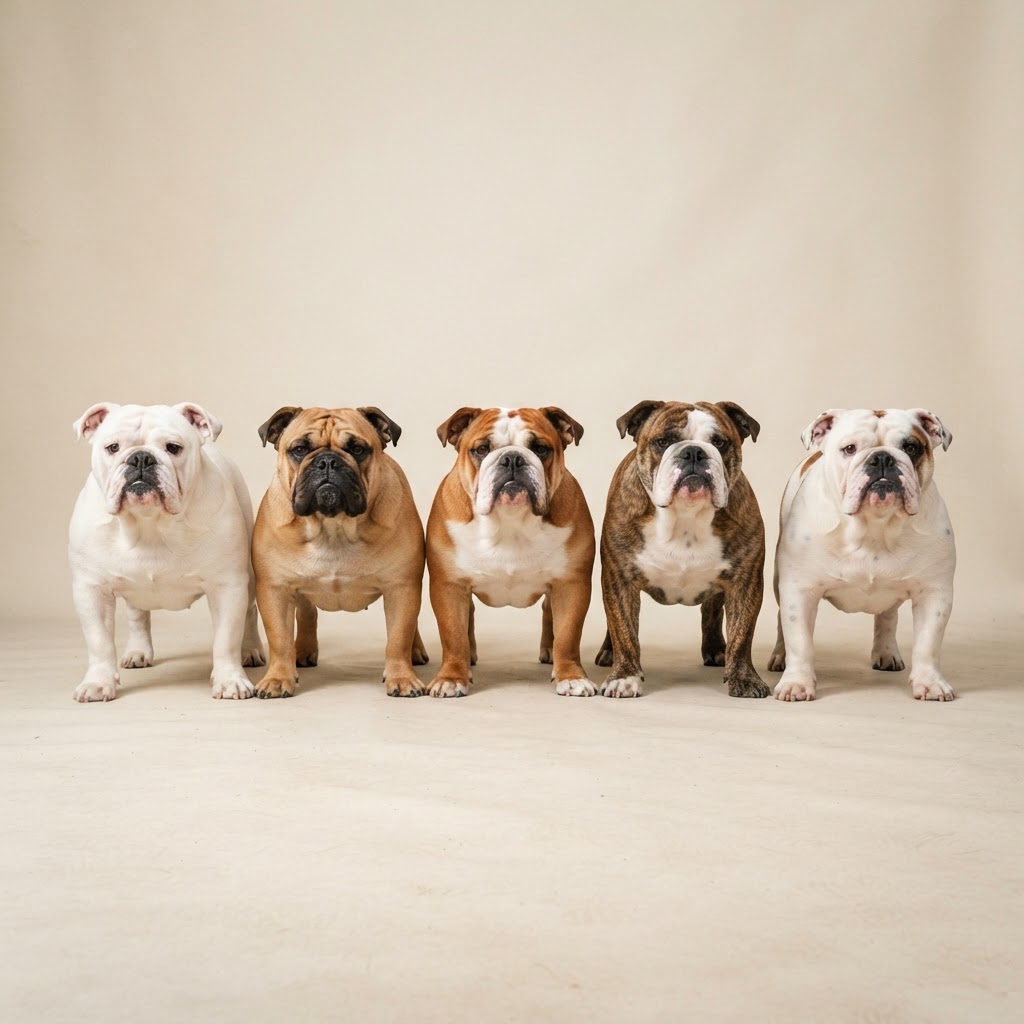
One of the first things people notice about an English Bulldog is their coat. From creamy all-white dogs to rich fawns, bold brindles, and warm reds, the breed comes in a wonderful range of colors and markings.
For prospective puppy owners, understanding these colors can be both fun and practical. But it's also important to remember that color is only one small part of what makes a healthy, happy bulldog.
The Most Common English Bulldog Colors
English Bulldogs can be found in several recognized colors and combinations. Here are the most common you'll encounter:
- Fawn — A soft tan or light brown, sometimes described as caramel.
- Fawn and white — Fawn with white markings on the chest, face, feet, or neck.
- White — An all-white or nearly all-white coat, sometimes called a “self-white.”
- Red — A deeper, warmer shade than fawn, ranging from light red to a rich mahogany.
- Red and white — Red with white markings, one of the most popular combinations.
- Brindle — A striped pattern of darker hairs over a lighter base, giving a tiger-stripe look.
- Brindle and white — Brindle with white markings.
- Pied — A white base with patches of color, often fawn or brindle, on the body and around the eyes.
Each of these is a perfectly normal, traditional English Bulldog color.
What “Pied” and “Brindle” Really Mean
Two terms often confuse new puppy buyers: pied and brindle.
Pied refers to a mainly white dog with patches of color. A pied bulldog typically has a white body with colored markings around the eyes and ears.
Brindle is a striped coat pattern, not a solid color. The stripes are darker hairs layered over a lighter fawn or red base. No two brindles look exactly alike, which makes them especially distinctive.
Both pied and brindle are recognized, traditional English Bulldog patterns. If you're unsure what a term means, a responsible breeder will happily explain and show you examples.
Markings and the Black Mask
Beyond base colors, many English Bulldogs have markings that add to their expression:
- Black mask — Dark shading around the muzzle and eyes, common on fawn and red dogs.
- White markings — White on the chest, feet, face, or neck.
- Ticking — Small flecks of color within white areas, less common but normal.
These markings don't affect health or temperament—they simply give each dog their own look.
Color Does Not Determine Health or Temperament
A common myth is that certain colors are automatically healthier, calmer, or better companions. In reality, a bulldog's health and personality come from responsible breeding, health testing, socialization, and care—not from coat color.
A well-bred fawn, white, brindle, or pied bulldog can all be equally healthy and wonderful. Choose based on the breeder's practices, the puppy's temperament, and your lifestyle—not color alone.
Non-Standard Colors: What to Know
Some colors are occasionally marketed as “rare” or “exotic,” including blue (a diluted gray), lilac, chocolate, and merle. These are not part of the recognized English Bulldog breed standard.
Buyer beware: Some non-standard colors are linked to health concerns or are the result of crossbreeding. A premium price tag on a “rare” color is never a substitute for health testing, responsible breeding, and a good temperament.
If a breeder emphasizes color above all else—especially rare or unusual colors—consider it a reason to ask more questions, not fewer.
Color and Price
Some sellers charge significantly more for certain colors, marketing them as exclusive. But color itself doesn't make a dog more valuable as a companion.
What truly matters is what you're paying for:
- Health-tested parents
- Thoughtful, ethical breeding practices
- Early socialization and care
- Lifetime support from the breeder
A higher price for a “rare color” often reflects marketing, not quality. Focus on the breeder's standards instead.
Choosing Your Puppy
It's completely natural to have a favorite color. Many families fall in love with a particular look.
Just remember:
- Color is the least important factor in a healthy, lifelong companion.
- Health, temperament, and the breeder's responsibility matter far more.
- The perfect puppy is the one that's healthy, well-socialized, and a good match for your home.
Every color is beautiful. Whether your bulldog is snowy white, golden fawn, striking brindle, or warm red, what matters most is a healthy, well-loved companion who fits your family. Choose the breeder first, and let color be a happy bonus.
🩺 Medical Information Notice
This guide is provided for educational purposes only. Coat color is not a reliable indicator of health or temperament. Always research a breeder's health testing and practices, and consult your veterinarian with questions about any specific dog.